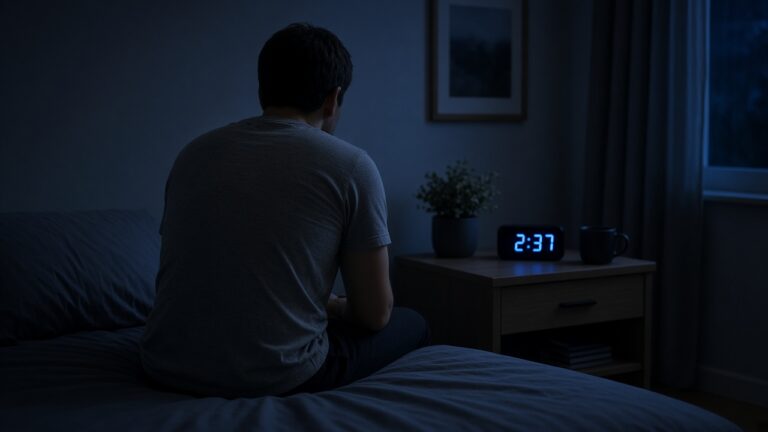
If you are worn out in a way a full night does not fix, you may be trying to name perimenopause fatigue. Your periods may be changing. The next day can still feel too heavy for the sleep you had.
How you feel, how your cycles have changed, and whether the tiredness follows your nights are the clues we use. Innovative Health and Wellness Group sorts them with you in Dallas.
If you want the wider picture of hormones across life stages, start with Hormone Imbalance in Women. If the exhaustion has lasted a long time and does not follow your sleep or your cycles, start with Hidden Causes of Chronic Fatigue.
Keep this in mind:
- Perimenopause fatigue is a pattern to map – sleep, cycles, and bleeding – not a label alone.
- Night sweats, heavy bleeding, and mood changes often sit in the same months.
- Thyroid issues, low iron, sleep apnea, depression, and some medicines can look the same.
- Chest pain, trouble breathing, fainting, or flooding that soaks a pad every hour needs same-day care.
- At Innovative Health & Wellness Group in Dallas, we start with your symptoms, cycles, and sleep.
By Erin Van Veldhuizen · Published November 16, 2026 · Medically reviewed
What This Stage Is
Perimenopause is the stretch of years leading up to menopause. The National Institutes of Health describes it that way. Menopause is the point 12 months after your last period. Most women begin this transition between ages 45 and 55. In the United States, the average age of menopause is 51 to 52.
You have reached menopause only after a full year with no period. If that year is already behind you, you are past this transition. The tiredness in these years is its own question.
During the transition, the ovaries start to make less estrogen and progesterone. The National Institutes of Health says those hormone changes cause symptoms some women have. Levels also fluctuate. One blood test has limited value for placing you in the stage. The same page says these symptoms can last from two to eight years. Timing varies from person to person.
Pregnancy is still possible while periods are irregular. If you do not want to become pregnant, keep using birth control until the transition is complete.
What Does Perimenopause Fatigue Feel Like
A large midlife study asked women if they felt tired, worn out, or full of energy. Those are useful words for what perimenopause fatigue feels like.
At one visit, about one in four said they felt tired a good bit of the time or more. About one in four said they felt worn out that often. The count was a good bit of the time, most of the time, or all of the time. A little tiredness on a hard day was not the count.
That visit was early in follow-up. The average age was about 47. The women had entered the study while periods were still happening. This is not the rate for every woman in Dallas. It is not a diagnosis from a feeling.
You may notice the drain through the day, not only as a wish to go to bed early. Periods can still be coming while that drain is already there.
In daily life, the pattern often looks like this. You wake tired. Ordinary tasks take more than they used to. Your mind may slip off the task. A long night in bed may still leave you short on energy. The National Institutes of Health notes that long-term lack of sleep can lead to fatigue, lack of energy, and memory problems.
The feel is a reason to look more closely. The feel alone does not confirm the cause.
Does Perimenopause Cause Fatigue
The transition can lead to the tiredness. That is the honest first half of the answer. It is not the only cause, and it is not the cause for every person.
You can have perimenopause and fatigue in the same years for more than one reason. We still ask what else could drain you. Night sweats can break sleep. Mood changes can break sleep. Heavy bleeding can leave you drained. A separate illness can look the same.
The National Institutes of Health says hot flashes at night are night sweats, and they may disrupt sleep. The National Institute on Aging also notes that mood changes, depression in particular, can add to poor sleep. That institute describes research in which waking from sleep may itself set off a hot flash. The sweat does not always come first.
The stage can tire you through the night you lost. It can also sit beside another reason. Both can be true.
Why Perimenopause Exhaustion Shows Up
You can often trace perimenopause exhaustion to a trail you can name.
Sleep is the first trail. If night sweats wake you, or you wake and then feel a wave of heat, the next day can feel flat. Trouble staying asleep is common in this transition. When the nights stay broken, the next afternoon can feel like one long slump.
Bleeding is the second trail. In the Study of Women’s Health Across the Nation, women wrote down bleeding on a daily calendar. Very heavy meant a pad or tampon change every one to two hours. That pace lasted more than four hours, on at least three days. Women who had that pattern at least three times in six months were more likely to feel tired. The link remained after the study accounted for sleep problems, mood symptoms, and other factors. The odds of feeling tired were still about 1.6 times as high. That is a link. It does not prove bleeding is the cause for you.
Heavy bleeding can also lower iron. Low iron is its own reason for fatigue. That study did not measure iron. If your periods are flooding, tell us. Do not start an iron pill on your own.
The hormone change is the third trail. Less estrogen and progesterone, with levels that swing, can travel with hot flashes, broken sleep, and mood shifts. Those are paths we can point to. We do not treat a hormone story as the whole answer before we hear the rest.
When Extreme Fatigue in Perimenopause Needs a Closer Look
If you are living with extreme fatigue in perimenopause, look past the stage label. The same nights and the same bleeding can feed that depth of tiredness. A thyroid problem or low iron can do that too. It can follow pauses in breathing during sleep, depression, or a medicine that makes you sleepy.
Bring us the pattern. We ask what else changed. We do not assign every tired week to hormones.
Some signs should not wait for a routine visit. Chest pain, trouble breathing, or fainting needs care the same day. Bleeding that soaks through a pad or tampon every hour for several hours needs care the same day. Those signs can be a different illness.
See a provider sooner when periods change in these ways. They happen very close together. Bleeding is heavy. You spot after sex or between periods. A period lasts more than a week. Bleeding returns after more than a year without a period. The National Institutes of Health lists those as reasons to be checked.
If sadness, anxiety, or irritability is extreme, or if you no longer enjoy your days, that can be depression. If you are thinking about harming yourself, call or text 988. If you are in immediate danger, call 911.
If the exhaustion has gone on for months, and it does not follow your sleep or your cycles, start with Hidden Causes of Chronic Fatigue. That pattern is wider than this transition.
What Perimenopause Fatigue Treatment Depends On
The first step in perimenopause fatigue treatment is still which trail fits. There is no single plan for every woman. The National Institutes of Health says many women do not need treatment for this transition. Care depends on your symptoms, your history, and what you prefer.
If night sweats are breaking the night, a cool room and a steady sleep time are fair first steps. They do not replace a look at bleeding, mood, or another illness.
If the sweats and the broken sleep are the main story, hormone therapy is one option a provider can discuss when you are able to use it. The National Institutes of Health says it can relieve hot flashes and night sweats. It also has risks. It is not the right fit for every person. It is not a promise that the tiredness will stop. If you want to see how this kind of care is given, start with How Does Bioidentical Hormone Therapy Work.
A provider may also talk with you about very heavy bleeding. Do not start, stop, or change a hormone medicine on your own. Stay on a medicine you were prescribed unless the prescriber changes it.
When the story fits, specialty testing can be part of care at Innovative Health and Wellness Group. We may look at iron, thyroid, or hormones when the question calls for that test. We do not send every tired person for the same panel. One hormone level does not map this stage.
Women’s Health at our center is where that visit sits. Your story sets the next step.
When to Talk With Us
Come see us when:
-
The tiredness is shaping your days, and rest is not giving the day back
-
Night sweats or broken sleep sit next to the exhaustion
-
Periods are heavier, longer, or closer together
-
Mood changes are part of the same months
-
You want the stage question kept separate from a longer fatigue pattern
For that pattern, bring the list to Innovative Health and Wellness Group in Dallas. We start with your symptoms, your cycles, and your sleep.
How We Help in Dallas
If this pattern is shaping your days, Innovative Health and Wellness Group is where you can bring it. We look at perimenopause fatigue as your pattern, not as a label you have to prove alone. We ask what you feel, how you sleep, how you bleed, and which medicines you take.
When your story fits, specialty testing and a hormone conversation can be part of the next step. The plan stays individual. Your story sets that step. A symptom list by itself does not.
If this tiredness is affecting your days, book an appointment with us in Dallas, or call (469) 746-4662. We are at 4001 McEwen Rd #100, Monday through Friday, 8 a.m. to 6 p.m.
Perimenopause fatigue
Straight answers to common questions.
01 Does perimenopause cause fatigue? +
It can. Broken sleep, night sweats, mood changes, and heavy bleeding are paths the research supports. The stage is not the only cause. A thyroid problem, low iron, pauses in breathing at night, depression, and some medicines can look the same.
02 What does perimenopause fatigue feel like? +
In a large midlife study, about one in four women at one visit felt tired a good bit of the time or more. In daily life that can mean waking tired, dragging through ordinary tasks, and losing the thread of a thought. The feel does not diagnose you.
03 Can perimenopause cause fatigue? +
Yes. It can, when sleep breaks, when bleeding is very heavy, or when mood changes. It does not tire every woman. It does not explain every tired week.
04 Does perimenopause make you tired? +
It can make you tired through the night you lost, through heavy bleeding, or through a low mood. A quiet week of ordinary tiredness is not the same pattern. If the drain keeps shaping your days, it deserves a closer look.
05 Is fatigue a symptom of perimenopause? +
Yes. Women report it often in this stage. It is also a symptom of other illnesses. The next step is to see which story fits you.
06 What does perimenopause fatigue treatment depend on? +
It depends on the driver. Sleep and night sweats, heavy bleeding, mood, iron, thyroid, and a hormone plan are different conversations. Many women do not need a medicine. Hormone therapy is one option for bothersome hot flashes and night sweats when you can use it. It is not a promise that the exhaustion will end.
07 Where can I get help for perimenopause fatigue in Dallas? +
Innovative Health & Wellness Group is at 4001 McEwen Rd #100, Dallas, TX 75244. Book online, call (469) 746-4662 weekdays 8 a.m.-6 p.m., or use the contact page. Bring what you feel, how you sleep, and how your periods have changed.
Ready for a clearer plan around perimenopause fatigue in Dallas?
Bring what you feel, how you sleep, and how your periods have changed.
Bring Us the Pattern, Not Only the Tiredness
If you are sorting perimenopause fatigue, you do not have to decide the cause from tiredness alone. Broken nights, night sweats, heavy bleeding, and mood changes are the clues. Another illness can still be the reason.
If that pattern is shaping your days, come see us at Innovative Health and Wellness Group in Dallas. Book an appointment, or call (469) 746-4662. Bring what you feel, how you sleep, and how your periods have changed.
Medical disclaimer: This article is for education. It is not a diagnosis or a treatment plan. It does not replace care from your own provider. Seek urgent care for severe, sudden, or rapidly worsening symptoms.
About the author
Dr. Erin Van Veldhuizen is a family nurse practitioner and doctor of chiropractic focused on environmental, integrative, regenerative, and functional medicine. She holds diplomates in functional neurology and clinical nutrition, with added training in women’s health, thermography, and gluten-related care. She founded Innovative Health and Wellness Group in Dallas to find root causes, not only to quiet symptoms.
Sources
-
National Institutes of Health. “Menopause.” https://health.nih.gov/womens-health/menopause
-
National Institute on Aging. “Sleep Problems and Menopause: What Can I Do?” https://www.nia.nih.gov/health/menopause/sleep-problems-and-menopause-what-can-i-do
-
Harlow SD, Gold EB, Hood MM, Mukwege AA, Randolph JF, Greendale GA. “Abnormal uterine bleeding is associated with fatigue during the menopause transition.” Menopause. 2025;32(6). https://doi.org/10.1097/GME.0000000000002525