




Testosterone boosting peptides are marketed as a way to raise low T without “going on testosterone.” Sometimes the pitch is that a short amino-acid chain will tell your pituitary or testes to do the job. Sometimes the pitch quietly swaps in growth-hormone secretagogues and hopes you will not notice.
The useful question is not “which peptide is strongest.” It is whether your hypothalamic–pituitary–gonadal axis can still be signaled, whether the product in the vial actually does that, and whether you even have hypogonadism. Many men who feel tired, flat, or weaker have sleep apnea, depression, iron problems, overtraining, or obesity-related hormone shifts — not a peptide deficiency.
On this page
- How testosterone boosting peptides are supposed to work
- What is not a testosterone peptide
- Signaling versus replacement
- Labs before any vial
- Limits, quality, and who should pause
- Questions people ask
How testosterone boosting peptides are supposed to work
Testosterone in men is mostly made in the testes after luteinizing hormone (LH) arrives from the pituitary. The pituitary, in turn, listens to GnRH pulses from the hypothalamus. A drug that raises T without supplying testosterone itself has to work somewhere on that chain — or it is mislabeled.
Compounds that belong in this conversation, when they are discussed in medicine at all, are the ones that try to preserve or stimulate the axis: certain GnRH-related signals, kisspeptin in research settings, and gonadotropins such as hCG (a glycoprotein hormone, not a typical “peptide stack” even though clinics sometimes group it with the same visit). The point of those tools, when they are used, is to keep testicular signaling alive — fertility, endogenous production — not to win a body-composition contest.
That is a different problem than peptides vs steroids for muscle. Anabolic steroids and high-dose testosterone replace or exceed androgen. Axis-sparing drugs try not to. Mixing the two in one shopping list is how men end up suppressed and confused.
What is not a testosterone peptide
A lot of pages, including older copy on this URL, lumped the wrong names together. Correcting that matters more than adding another list of “popular peptides.”
- GHRH analogs, sermorelin, ipamorelin, tesamorelin: these are growth-hormone axis drugs. They may change GH/IGF-1. They are not a reliable testosterone protocol. Feeling a little better on a GH secretagogue does not mean your T rose.
- GnRH antagonists (for example drugs used in fertility clinics to stop premature LH surge): these suppress the axis. They are the opposite of a boost.
- Myostatin-pathway research proteins sold under creative names: muscle-biology experiments, not testosterone replacement.
- Oral “peptide boosters” in a bottle: short amino acids in a capsule often have poor intact absorption. A supplement label is not pituitary pharmacology.
If you need the basic definition of a peptide, use the understanding peptides explainer. If you want a clinic-framed service page, that is peptide therapy. This page stays on the low-T claim.
Signaling versus replacement
Testosterone replacement (gels, injections, pellets) raises circulating T because you put T in. The testes often make less of their own. Sperm production can fall. That tradeoff is known and, for some men with confirmed hypogonadism, accepted with monitoring.
A signaling approach tries to leave the factory open. It only works if the factory can still run. Primary testicular failure (high LH, low T) will not magically answer a peptide. Pituitary or hypothalamic problems need a diagnosis, not a cart of vials. Normal-range T with fatigue is not a peptide indication.
None of these peptide products, as a class, are an FDA-approved “boost your testosterone” consumer therapy. Individual drugs have individual labels. Compounded blends with a catchy stack name are not those labels. Quality varies by pharmacy and by internet seller. “Research chemical — not for human use” is a warning, not a vibe.
Labs before any vial
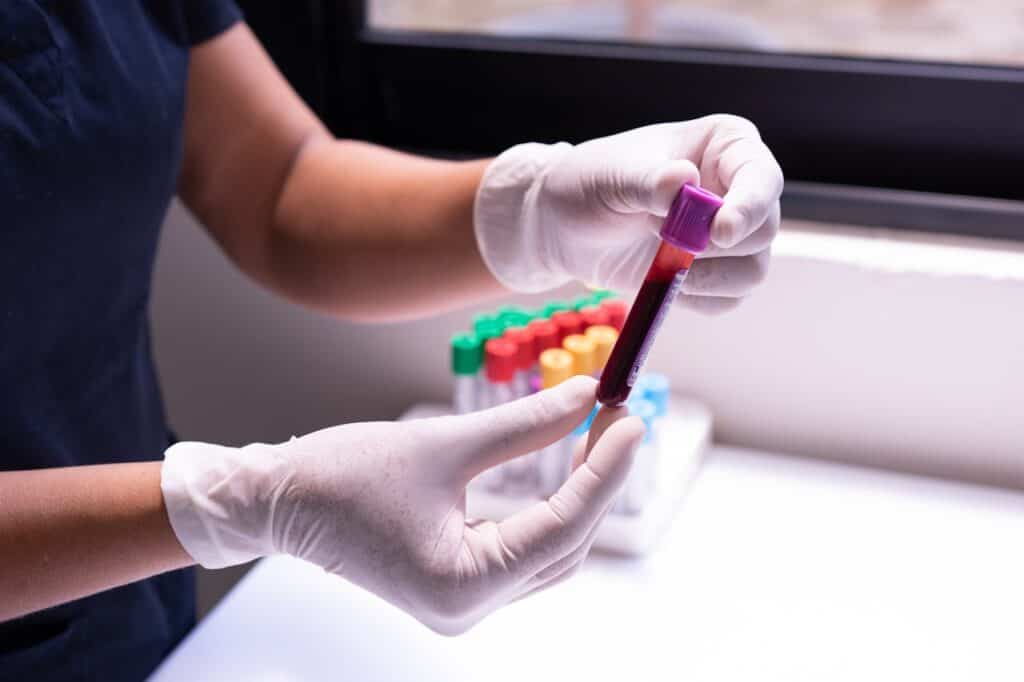
Do not start with a product. Start with a morning blood draw, repeated if the first result is low or borderline. MedlinePlus outlines the testosterone blood test: why it is drawn, how to read it with symptoms, and why a single number is not a personality.
A first pass that actually helps:
- Total testosterone, and free T or SHBG so you are not fooled by binding proteins
- LH and FSH (is the brain shouting at the testes, or silent?)
- Estradiol when you are considering any androgen or secretagogue
- Prolactin if indicated
- CBC (hematocrit later matters on real T therapy)
- Metabolic labs that explain fatigue without blaming T: A1c or glucose, TSH, ferritin
Time of day matters. So does biotin, recent illness, opioids, steroids you already took, and poor sleep the night before. Screenshots from a wellness fair are a start. They are not a diagnosis.
A functional medicine visit here is still a history-first visit: meds, fertility plans, sleep, training, and the condition list that actually matches the symptoms. Peptides are not the opening move.
Limits, quality, and who should pause
Talk to a clinician before anything injectable. People who should not improvise include anyone with a hormone-sensitive cancer history, untreated sleep apnea, a fertility goal in the next year without a plan, polycythemia, prostate symptoms that have not been evaluated, or a psychiatric medicine list that has never been reviewed against the protocol someone found online.
Women should not use “male T peptide” internet stacks. That is a different endocrine problem.
If you already started a gray-market kit: stop adding vials, keep the labels, and get labs. Infection at injection sites, severe edema, or mood crash is a now problem, not a next-month problem.
Questions people ask
Will testosterone peptides replace TRT?
Not as a class, and not if the testes cannot respond. Some men with secondary hypogonadism are managed with gonadotropins or other axis-sparing drugs under a specialist. That is not the same as a compounded “boost stack” from a menu.
How fast would I feel something?
If T is truly low and a real therapy is working, libido, energy, and training recovery change over weeks, not overnight. Feeling wired the same day is more often stimulant effect, placebo, or a different hormone. Recheck labs rather than chasing a feeling.
Can I stay fertile on them?
That depends on the drug. Exogenous testosterone usually lowers sperm counts. Some gonadotropin-based plans are used when fertility is the goal. Do not assume a peptide preserves fertility because it is not named “testosterone.” Ask before you start.
Are oral testosterone peptides enough?
Intact peptide hormones generally do not survive digestion well. If the only plan is a capsule from a cart, be skeptical. There are oral medicines that affect the axis (they are not peptides). Those still need labs and a clinician.
What should I bring to a first visit?
Morning labs if you have them, a medication list, whether you want children, and a list of every performance product you have used — including “research” names. Hide nothing. Suppression from a prior cycle changes the next step.
If you want that visit on the calendar, call (469) 746-4662 or use the booking page.